Wednesday, March 28, 2012

Sepher Raziel transcribed by Don Karr & modernized by Stephen Skinner


Golden Hoard Press.  264 pages.  Illustrated.  Octavo. 2010

Standard Edition: Cloth, unlimited.

Leather Edition: Burgundy bonded-leather boards, half bound in black calf, & limited to 250 copies.

Sepher Raziel, also known as Liber Solomonis, is the sixth book in Golden Hoard Press' 'Sourceworks of Ceremonial Magic' series.  It is preceded chronologically by The Practical Angel Magic of John Dee's Enochain Tables, The Keys to the Gateway of Magic, The Goetia of Dr. Rudd, The Veritable Key of Solomon, and The Grimoire of St. Cyprian -- Clavis Inferni.  The 'Sourceworks of Ceremonial Magic' series is one of the most important series on ceremonial and grimoire magic in print today, rivaled only by the 'Magic in History' series, published by Pennsylvania State University Press, and the 'Palgrave Historical Studies in Witchcraft and Magic' series, published by Palgrave Macmillan.


This particular copy of Sepher Raziel comes from Sloane MS 3826, an English grimoire dating to 1564.  The book is divided into two main parts: the original text transcribed by Don Karr, and a modern English version updated by Stephen Skinner.  It's nice to have both together for an easy side-by-side comparison.  Skinner's modern English version is particularly useful for modern practitioners who may not be fond of Elizabethan grammar and syntax.


Sepher Raziel opens with a Foreword by Stephen Skinner in which he discusses the origins of the text, its multiple variants, the provenance of Sloan MS 3826, and other texts Sepher Raziel has influenced, such as The Sixth and Seventh Book of Moses (all wonderfully footnoted).  According to legend the original Sepher Raziel was inscribed on a sapphire stone, much like the Emerald Tablet of Hermes.  The name 'Raziel' means 'Secrets of God', so clearly this was very important knowledge bestowed unto Man.  However it seems Raziel didn't get permission before revealing this potent knowledge.  As a result, the text changed hands between heaven and earth a number of times and eventually came to be in the possession of none other than King Solomon (who else?).


Following the Foreword is a piece by Don Karr titled, 'The Study of Solomonic Magic in English'.  Karr gives a solid overview of what constitutes 'Solomonic Magic' as well as the books that define the tradition, including Sepher Raziel and many others.  This is followed by a brief introduction to the text.

The sections of Sepher Raziel are as follows:

  1. Liber Clavis, the Book of the Key of Astronomy and of the Stars
  2. Ala, the Virtues of some Stones, Herbs, Beasts, and Words
  3. Tractatus Thymiamatus of Suffumigations 
  4. Treatise of Times of the Day and of the Night
  5. Treatise of Purity and of Abstinance
  6. Samaim which Names all of the Heavens and their Angels
  7. Book of Virtues and Miracles and the properties of the Ark of Magic


Sepher Raziel includes two Appendices.  Appendix 1, 'Incense Nomenclature', is laid out as a handy table to assist the reader in identification of botanicals, as certain perfumes and resins can somewhat confusingly go by many different names.  Appendix 2, 'Selected Table of the Angels in Sepher Raziel', makes magical timing easy by mapping out Angelic, Planetary, and Elemental correspondences and associations with clear and time-saving tables.  These tables (and more) can also be found in Skinner's Complete Magician's Tables (highly recommended).  Also included are a lengthy bibliography and index.


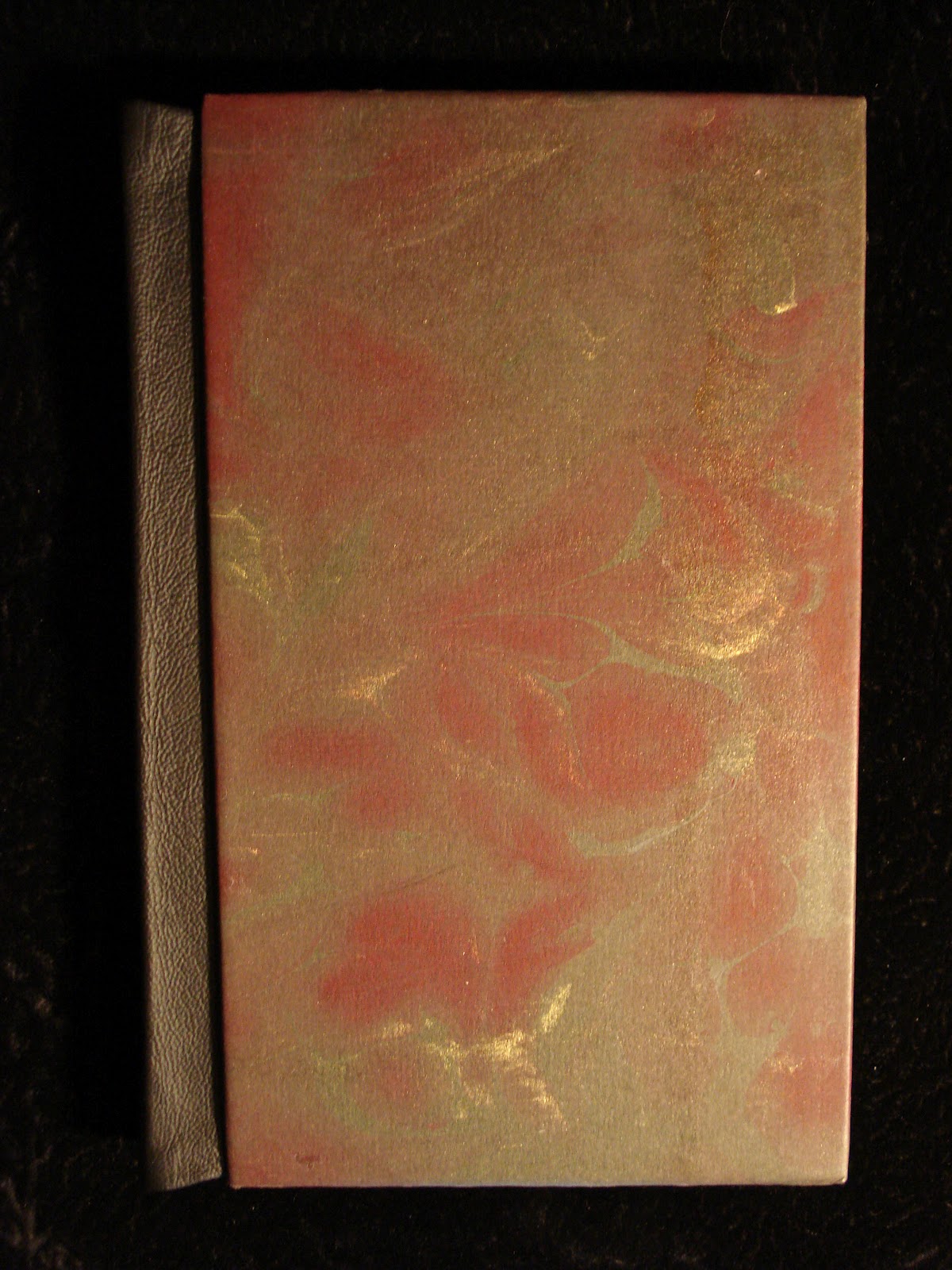
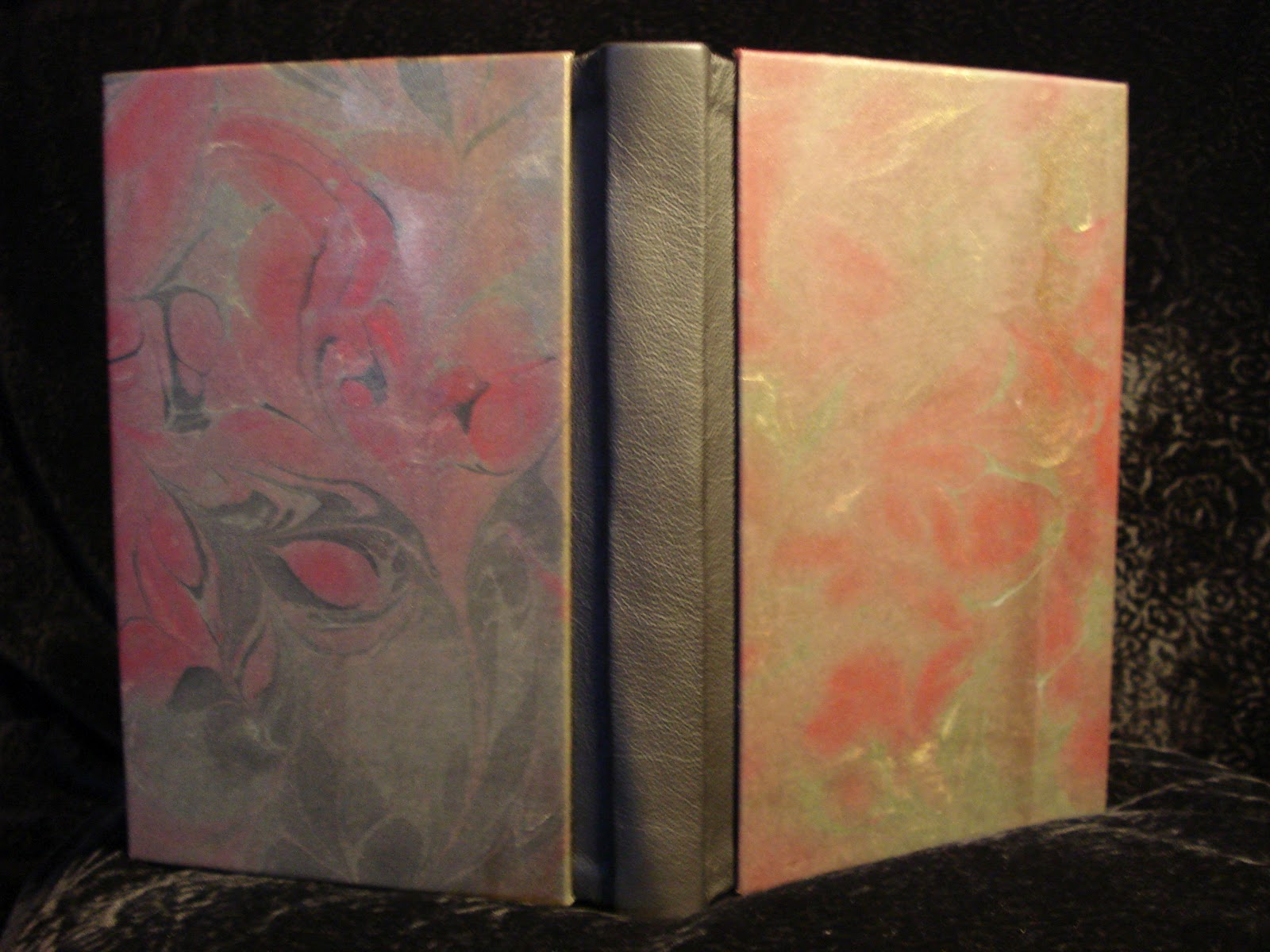
The leather edition has boards that appear to be covered in textured burgundy bonded-leather.  The rest is half-bound in black calf.  I suspect the decision to use bonded-leather was to keep the cost reasonable and under $200.  *A note on bonded-leather:  Bonded-leather can be made at a fraction of the cost of 'real' leather.  It may seem like a poor-man's substitute, but it shouldn't be criticized too harshly.  Bonded-leather is made from scraps and trimmings from the leather industry.  I believe when an animal is butchered for human use none of it should be wasted.  Thus, bonded-leather is a relatively environmentally responsible product (at least for those who don't have a problem using leather in the first place).  Furthermore, bonded-leather techniques have come a long way.  The old stuff had a plastic-like look and feel, but more recent improvements have created a far superior product.  In fact, some bonded-leathers are almost indistinguishable from 'real' leather.


The black calf portion of the binding is soft and supple.  The spine has seven raised bands with title, authors, and press stamped in gold.  Unlike other volumes in this series, there is no front tile (usually they are stamped in gold) -- a rather odd and unfortunate decision.  The book opens to printed endpapers marbled in gold, green, and cream.  I must say, I'm not very fond of printed faux-marbling.  It's not fooling anyone, and it reminds me of cheap gift-wrap.  I realize hand-marbled paper can be expensive; however, if cost is an issue I would prefer solid-colored paper with a nice texture over faux-marbling, as it doesn't pretend to be something it is not.  The book is finished with red/gold head and tail bands with a red ribbon bookmark.  The book includes a loosely inserted bookplate signed by Don Karr depicting the familiar horned image of Lucifuge Rofocale as found in Le Dragon Rouge.  The limitation page is signed by Stephen Skinner.  Text is crisp on smooth matte paper of medium weight.  I appreciate the spacious margins given to text-blocks.  The title is printed in red.  Some black & white scans of actual manuscript pages are included to give the reader an idea of how the text appears in its original form.  These can be a little difficult to read, as the words are small and written in a crabbed hand.


Overall it is a very classy presentation that is somewhat uniform with others in the series.  With the exception of Volumes 1-4, each volume in the series has black leather spines and uniquely colored boards.  It seems the series is constructed with both aesthetics and functionality in mind.  It is a very handsome book, yet durable enough to withstand years of practical use.  Whether a scholar or Solomonic magician, look no further than Sepher Raziel and others in Golden Hoard's  'Sourceworks of Ceremonial Magic' series, for as the press' name implies, they are a veritable treasure trove.

Tuesday, February 28, 2012

Liber Nigri Solis edited by Victor Voronov


Octavia & Co. Press     Illustrated.  Octavo.  2009

Standard Edition: Trade paperback, unlimited.

Deluxe Edition: Quarter-leather, limited to 39 copies.

Liber Nigri Solis (Book of the Black Sun) is a collection of the combined writings of two esoteric orders, Arcanum Ordo Nigri Solis and Ordo Hermeticum Sinistrum.  It is touted as "An Aeonic Astrochymical Grimore of the Black Sun".  The unknown writers claim the book contains "self initiatory workings, rites, and operations of sinister alchemy, initiating the practitioner into the gnosis of Sol Niger."


One of the main problems I've encountered when reading books written by closed orders/sects/clans is that said groups often engage in insulated group-think.   As a consequence, they become echo-chambers for their particular point of view or belief system.  This is all fine until they try to express their message to the outside world.  Many tend to use obscure or needlessly archaic terminology, colloquialisms unique to their area, or even completely invented terms that mean absolutely nothing outside their limited cadre of initiates.  As a result, the message or teachings become garbled or untranslatable.  Books become too heavy with temple jargon while shunning effective, recognizable, and everyday terms.  What may seem clear and defined to the author winds up as impenetrable nonsense to most readers who are not familiar with a group's slang.  Worse still when authors muddy the waters further with outlandish purple prose and horror fiction tropes and allusions.


One can find similar problems in the pedantic writings of many academics.  One can only stomach words like, 'eschatological' or 'epistemological' so many times on a single page before one wants to fling the book across the room (see Christopher Lehrich's The Occult Mind: Magic in Theory and Practice for an example of egregious overuse of the latter term).  However, there are a few very skilled writers who can pull it off effectively.   By using surreal prose, peppered with a little arcane terminology, they lull the reader into an altered state.  From this trance-like state their words work subconsciously and are understood intuitively.  In some cases, words and phrases are meant to be felt, not rationalized.  Examples include the often bizarre, yet fascinating, works by Kenneth Grant and Michael Bertiaux.  Liber Nigri Solis falls far short of this.  Instead, sentences like the one below come off  as needlessly verbose Lovecraftian mumbo-jumbo.
 "Incarnate their would-be avatars nevertheless infest all worlds as the profligate and prodigious children of the Parasite-God, an anti-race the verminous forms of which are the microcosmic shells cast off excrementally in the blind, unreflective placental spasms of the nameless Arch-Parent of the Gods of Sleep, the noisome ancestor of the half-remembered anthropoid First One and its parasitic twin."


At this point the reader may begin to doubt whether or not there is even anything of value within the text.  It appears to be a collection of poorly articulated ramblings, a manifesto or sorts that falls vaguely within the 'Chaos magic' tradition.  It even inverts the Chaote motto by stating, "Everything is false, but Nothing is Forbidden".  Unfortunately for this book, it never amounts to more than a turgid diatribe of speculation and convoluted language.  I suspect this book is where unwanted adjectives go to die.

There are some texts (particularly in the grimoire tradition) known to be intentionally opaque or include misdirecting 'blinds' to hide their true meaning from unworthy eyes, but I don't think Liber Nigri Solis is one of these.  The author(s) clearly have a wide background of occult knowledge.  It's a pity they couldn't pull it together into something more coherent.  I stopped taking the book seriously when I encountered the word 'dark' for the thirteenth time on a single page.  Everything in Liber Nigri Solis is "dark", "shadowy", "black", or 'anti-(fill in the blank) '-- and don't forget "sinister"!-- to the point of absurdity.  Perhaps it should have also come with a limited edition bottle of black nail-polish.  If my readers, or the authors of Liber Nigri Solis, really want to read something 'dark', I suggest they pick up Thomas Ligotti's The Conspiracy Against the Human Race, but make sure you remove all firearms from your home first.  You'll thank me later.


Though I must admit, the book did trigger a bit of nostalgia for me.  It reminded me of the time (many years ago) when as a young man I purchased the leather edition of the 'Simon' Necronomicon (1977 -- limited to 666 copies, of course).  Like the Necronomicon, Liber Nigri Solis discusses astral 'gates' and 'keys'.  I don't think it's an intentional hoax, like the Simon Necronomicon, but it does try very hard to be the darkest book on your shelf.


It should be mentioned that there are some people who swear by the magical efficacy of the Necronomicon, sometimes referring to themselves as 'Gate-walkers'.  I have no reason to dispute their claims, as I know of others who have successfully used Huckleberry Finn and The Little Prince for magical purposes too.  Therefore, it's possible that someone with a highly creative mind might be able to convert Liber Nigri Solis into something miraculous, like an intelligible book.  Good luck with that.


Questionable text aside, the book itself is fairly attractive.  It is bound in black quarter leather with gold and maroon hand-marbled boards.  The book is bound using an uncommon method called Bradel-binding, also known as German box binding.  Leather head/tail bands are a nice touch and lend some character.  The title page is sigilized in ink by the editor, Victor Voronov.   End-papers are a deep terracotta color.  The paper stock is a poor choice.  It's far too thin for this style of binding, as the stitching puts uneven pressure on the paper, creating a rippling effect on some pages.  The book lacks a title on both the spine and cover, not even a device of any sort.  This is unfortunate, as it would have given the book a bit more character and made it recognizable on one's shelf.  When viewed from the spine the book is black, unremarkable, and empty, a rather ironic reflection of the content therein.


Tuesday, February 14, 2012

A note on grimoire scalping...

The increasing popularity and publication of finely bound and limited edition esoteric books has been enthusiastically welcomed in recent years by both collectors and practitioners.  It's been said we are in a new 'Golden Age' of occult publishing.  However, increasing demand has also created an unfortunate side-effect: book scalping.  Recent esoteric books, some less than a year old, are now commanding astronomical sums on the secondary book market.  This is unfortunate, as it entices people to purchase these exceptional books for the sole purpose of reselling them for profit.  They have no interest in collecting fine bindings nor appreciation for the book's unique (and even sacred) content; they only see dollar/pound signs and a means to make a quick buck.

Many esoteric publishers, such as Scarlet Imprint, Fulgur Ltd., or Ixaxaar publish finely bound variants of their standard publications, usually limited to under 100 copies.  This can make acquiring copies somewhat difficult, as some books have been known to sell out in a matter of days or even a single afternoon.   I'll give a recent example: Last weekend Fulgur Ltd. sold all 88 copies of the Deluxe edition of The Sacrificial Universe by David Chaim Smith.  Pre-order began on Friday.  By Monday all copies were sold.  This is wonderful news for both Fulgur and Mr. Smith.  I should also note that, as of this writing, there are still copies of the standard edition available here-- this one should not be missed.  This clearly shows there is a large demand for fine editions.  Unfortunately, high demand and enthusiasm has led to predatory purchasing practices by some shady individuals.  Of the very limited copies available, a portion is snatched up by profiteers at the expense of legitimate readers.  With such limited runs, it's a shame that an increasing number of copies are not ending up in the hands of worthy and appreciative book lovers, as intended.  Instead they end up on ebay (as soon as the title is sold out) for a ridiculously inflated sum.

The Society of Esoteric Endeavour recently published Nigel Pennick's The Toadman: Lore & Legend, Rites & Ceremonies, and Related Traditional Magical Practices, limited to 150 copies and bound in toad skin.  Naturally, a book this unique sold out quickly.  The title is only weeks old and already someone is attempting to sell their half-leather copy on ebay for $1,263.50.  This is mercenary book scalping at its worst.  With a book this new, clearly the owner had no intention of keeping it, and only bought it to resell it for profit.  It's one thing to decide years down the road that one no longer wants a book and sell it at the going rate; it's quite another to buy it with immediate resale in mind.  Anyone can understand why a 20+ year old rare book may have a high price tag.  However, it looks pretty shady when someone asks a thousand dollars for a brand new book.  They're exploiting the publisher and reducing opportunities for genuine customers.

So what should be done to prevent this?  Can anything be done?  I think publishers may want to consider keeping track of who purchases their high-end editions.  A quick glance at ebay's occult book auctions will reveal that many scalped titles are being sold by the same individuals/sellers, some even brazen enough to show or list the book's limitation number.  This could easily be tracked to the buyer if the publisher wished to do so, and future sales could be restricted.  Many publishers already have a 1 book limit.  However, with so few copies, even a handful of grimoire scalpers can make a significant negative impact, leaving many legitimate buyers out of luck.

There could be a magical answer to this problem, though built-in curses designed to sabotage the efforts of would-be scalpers should be avoided (at least publicly).  Official Melissa Press did something similar to combat illegal scanning and file sharing.  Their newest title, Infernal Colopatrion, warns, "Also know that each copy has upon it a curse that will activate if someone steals your copy, or if the book is scanned or illegally uploaded."  While I appreciate the magical LoJack, statements like this could create some legal issues, as it could be viewed as a threat.  Throwing curses around in public generally isn't a good idea.  Official Melissa Press may want to have a lawyer examine the statement for potential liability issues, if they haven't already.

Lastly, unscrupulous re-sellers do a disservice to the publishers, authors, honest customers, and most importantly, the books themselves by reducing them to a commodity rather than a sacred text or work of art.  I urge all my readers to refrain from purchasing books from scalpers.  Please, only buy books that are offered at a fair and reasonable price.  Scalped books hurt the industry and its loyal readers.  If we pull together we can reduce the demand.  With our help grimoire scalpers will get stuck with pricey books they don't even want. 


Tuesday, January 24, 2012

The Red Church or The Art of Pennsylvania German Braucherei by C.R. Bilardi


Pendraig Publishing  548 pages.  Black & white illustrations.  Octavo.  2009

Standard Edition:  Trade Paperback

Special Edition:  Hardcover, limited to 100 copies.  Includes personalized himmelsbrief.

The Red Church or The Art of Pennsylvania German Braucherei: The Traditional Blessed Healing Art for the Good of Man and Beast is a massive collection of charms (both verbal and written), prayers, formulae, herbal lore, folk medicine nostrums, and other magical operations that fall within the Pennsylvania German charming tradition known as Braucherei (pronounced BROW-ker-eye; meaning, to try).  It is also commonly called 'Pow-Wow' from the Algonquin word 'Pau Wau' which was used to describe medicine men or spiritual leaders.  The Red Church is one of the most comprehensive collections of Braucherei practices ever assembled and is arguably the most important book the tradition has seen since Lee Gandee's 1971 autobiographical classic Strange Experience: The Secrets of a Hexenmeister.


Author Chris Bilardi, a recently ordained Pastor of the Lutheran Orthodox Church, begins the book with a thorough history of the tradition and the rural culture in which it developed.  Bilardi isn't just a historian, he's also a Braucherei practitioner, known as a Braucher or Pow-Wow Doctor (more sorcerous types are sometimes called Hexenmeisters).  His stated goal is to preserve this rather obscure folk magic tradition and dispel misconceptions that have arisen in recent years.

One such misconception is the tenancy for some to erroneously link Braucherei to Pagan traditions.  He believes the Paganizing of Pow-Wow by modern revisionists obscures the tradition's basic tenets and threatens its historical authenticity.  There is a legitimate Germanic Pagan practice found in Pennsylvania called Urglaawe (pronounced OOR-glawe-veh; meaning,  primal faith), but it is distinctly different from Braucherei, as Braucherei is essentially a Christian folk magic system.

It is true that there has always been plenty of cross-pollination within folk magic traditions, and some Braucherei charms can be traced far enough back in European history to possibly have Pagan roots, but the tradition itself and its core belief structure are solidly Christian.  Brauchers believe that their power does not originate within them; rather, they are conduits of Divine force.  This is why when asked if they can help or heal someone they simply respond, "I can try", as ultimately it is not up to them; it is up to the Divine.

It's understandable why Bilardi is protective of Braucherei's heritage considering it nearly disappeared completely during the early 20th century due to the highly sensationalized 'Hex Murder' case in 1928.  What remained went underground.  Fortunately it is still holding on here and there and even beyond Pennsylvania with known Brauchers practicing quietly in Kentucky and Wisconsin.


Like most folk magic traditions, Braucherei utilizes concepts of 'contagous magic' and 'sympathetic magic', much like its southern counterpart: Hoodoo.  It is also the Yankee cousin of English Cunning-craft, though Braucherei is exclusively a protective and healing tradition.  You will never find a Braucher willing to hex or harm, as they feel they will lose their ability if abused or used for ill.  They are the antithesis of the malevolent witch.  Brauchers are summoned to heal injuries and alleviate sickness (including animals), break hexes, protect homes and property, and charm items to increase their potency -- all done at no charge.  An example of the latter is a charm to make firearms shoot straight and always find their mark.

 Another well-known Braucherei charm is the himmelsbrief, or 'heaven's letter'.  It is a long written charm which is said to have been originally composed by God.  Different versions exist.  The most famous is the 'Magdeburg Letter' which reportedly fell from the sky in 1783.  It is believed that a himmelsbrief hung in one's home will protect the household from danger and sinister forces.  If carried in a pocket it will protect the owner from harm.  Bilardi  provides examples of himmelsbriefs and also includes diagrams of talismans, reduction spells like the ABAXACATABAX charm, and magic squares like the ubiquitous SATOR.

Himmelsbrief circa 1850s.
 Part of the Balkan collection.

Notably absent in The Red Church are the iconic barn stars or 'hex signs' of the Pennsylvania Germans.  This is a somewhat controversial topic among Brauchers and historians.  Some feel hex signs were used to focus and localize the powers of sacred geometry.  They may have been used as protective wards or 'painted prayers' to encourage fair weather for crops.  Chris Bilardi does not believe they had a specific magical intent, but were instead  just simple barn decorations.

'Triple Protection' Hex Sign 
created by legendary Braucher, Lee Gandee 


I respectfully disagree (in part) with Mr. Bilardi on this one point.  While I'm certainly not a Pennsylvania historian, considering the known Hermetic influences in the state's early history, I think it is fair to assume that some early hex signs were used for magical purposes.  It's also likely they were copied by the uninitiated and reduced to a type of folk art by those who were ignorant of their original purpose and symbolic meaning.  Regardless, even if hex signs did not originally have magical intent, the point may be a moot one, as hex signs certainly are used magically now.  Braucher Lee Gandee used them for magical purposes over 50 years ago.  Nor are they  going unnoticed by today's practitioners, including those who follow the Urglaawe path, as can be seen at the hex sign site Zaubereigarten.


Also included are lunar, planetary, zodiacal, and qabalistic charts to assist in magical timing.  A complete Braucherei herbal is provided to instruct the reader on the proper use of magical and medicinal plants.  New World practitioners will welcome this, as all the plants are native to North America (or long since naturalized).  It is a pharmacopeia of indigenous alternative medicine.


Chris Bilardi is nothing if not thorough.  The Red Church includes four Appendices: Glossary of Terms, Use of the Psalms and Names of God from Scripture, Pennsylvania German & Standard German Pronunciation Guide (PA German is its own dialect), and Table of Planetary Hours.  He also includes a lengthy Bibliography and extensive Index.


Physically the book is rather ordinary and what one would normally expect from a standard hardcover.  It has slate blue cloth boards.  Title and author are gilt-stamped on spine.  A cream-colored dust-jacket sports the title in blackletter script and includes a heart with tulip design in the fraktur style of the Pennsylvania Germans.  The back includes an image of a distelfink perched on a branch representing 'good luck'.  While the jacket may seem somewhat lackluster and monotone, it perfectly reflects the humble yet artful spirit of the Pennsylvania Germans.  It should be noted that the cover of the hardback differs from the trade paperback.

I'm puzzled why the title is printed uncomfortably close to the top edge of the dust-jacket on both the spine and cover, leaving almost no margin.  It's a rather unfortunate placement and aesthetically unappealing.  I can only assume it was an overlooked mistake.  Other unfortunate oversights include several typos and the chart for the Zodiac Influences is rather blurry (at least in my copy).  These are easily avoidable (if not obvious) mistakes that should have been caught by Pendraig Press' editors.  Even so, at a cover price of $46 The Red Church is a steal, minor flaws or no.


The book includes a tipped in bookplate with a Bible verse handwritten by Chris Bilardi, "And the light shineth in darkness; and the darkness comprehended it not." (John 1:5 KJV)  Others may vary.  What makes this book special and truly talismanic is that it also includes a himmelsbrief designed by the author.  It comes enclosed in a red envelope bearing the owner's name.


Braucherei books themselves are often considered physical talismans.  The tradition's most famous charm book (other than the Bible) is The Long Lost Friend by John George Hohman that famously includes the magical statement:
 "Whoever carries this book with him, is safe from all his enemies, visible or invisible; and whoever has this book with him cannot die without the holy corpse of Jesus Christ, nor drowned in any water, nor burn up in any fire, nor can any unjust sentence be passed upon him. So help me."
The Red Church continues this time-honored tradition by including 'The Binding and Blessing':
"Whoever takes possession of this book is bound to do good alone, to the glory of God and for all the well-being of Man and Beast.  No part of this work of mercy shall be abused.  All who make proper use of the contents of this book shall be blessed and held in Adonai's protective hands, safe from enemies seen and unseen, and from all malign witchcraft.
Anyone who abuses this work shall be bound: this book and its contents shall be forever closed and sealed to him."
Thus the book itself acts as a protective ward for those worthy of its blessing.  Brauchers take these magical declarations very seriously.


Readers will notice the frequent mention and use of the color 'red', the book's title being the most obvious.  Bilardi writes:
"Red is the most common color used in Braucherei; it is also the most mentioned color in Braucherei charms and prayers.  The symbolism is very plain and obvious, if dual: red is heat; therefore, it is also 'fire' and 'life' and 'blood' ... In Christian symbolism it is the color of redemption ... it can either impart an action and energy, or it can be used as a sympathetic 'sponge' to remove a condition..."  

It is not too difficult to notice the alchemical symbolism at work here, most notably the intense focus on the perfected rubedo phase.  Undercurrents of Western Esotericism should not be surprising, as some theorize that Braucherei is a folk magic manifestation of Rosicrucianism -- magic come full circle, as it were.  Indeed Pennsylvania has a long and colorful early history of resident alchemists, qabbalists, and astrologers, such as George de Benneville, Johann Gotfried Seelig, and Johannes Kelpius, the latter two were part of the Mystics of the Wissahickson who, if not formally, certainly had Rosicrucian leanings.

This uniquely American grimoire is a folk magic tour de force.  My hope is that it will ensure that Braucherei remains a living tradition for at least a few more generations.  Perhaps The Red Church will be as important to the tradition as the Pow-Wow classic Long Lost Friend was over 150 years ago.

It should also be noted that Dan Harms, author and mastermind behind the wonderful blog Papers Falling from an Attic Window, has a highly anticipated 'Definitive Edition' of Long Lost Friend in the works.  I met Mr. Harms briefly in Providence, RI back in '99.  He was friendly and extremely knowledgeable in his area.  I am very much looking forward to reading his research on Long Lost Friend.

Beautifully restored Long Lost Friend by JRR Bookworks

Note*  For those interested in learning more about the history of Braucherei (Pow-Wow) beyond this book (particularly from an academic perspective), I would highly recommend Powwowing Among the Pennsylvania Dutch: A Traditional Medical Practice in the Modern World by David W. Kriebel (2007) and Pennsylvania Dutch: Folk Spirituality by the late Richard E. Wentz (1993) who, sadly, just passed on September 25h.


As my readers have probably noticed by now, this blog doesn't play favorites; esoteric Christian theurgical texts are reviewed right along side diabolical tracts of infernal pacts.  Whether rustic charm books about toad-bone rites or Freemasonic treatises on sacred geometry, I hope everyone finds something of interest or perhaps a new path worthy of further exploration.  Thanks again.

B. Balkan


Thursday, January 12, 2012

WINNER: 2011 Esoteric Book of the Year

Balkan's Arcane Bindings (BAB) is proud to announce its pick for the English language 2011 Esoteric Book of the Year.

The BAB 'Golden Talisman Award' for '2011 Esoteric Book of the Year' goes to....


Scarlet Imprint's Crossed Keys translated by Michael Cecchetelli (Sable et d'Or Edition).

This book is simply jaw-dropping.  Bound together for the first time are two complimentary Late Renaissance works, the Enchiridion of Pope Leo III and The Black Dragon.  Contents range from spirit summoning to folk charms.  It is appropriately bound in scale-patterned, black, goatskin with inset dragon figure on marbled background.  Gilt edges and ribbon bookmark.  It is lavishly presented in a golden leather case with ribbon closures.  Amazingly, the Sable et d'Or Edition of Crossed Keys sold out in a single afternoon.  To meet the incredible demand, a handful of extra copies were added to the print run (totaling 55), and were quickly snatched up. It is sure to become a legend.  Mr. Cecchetelli has done a tremendous service for grimoire magic by introducing a new generation of magicians to these historic (and more importantly, useful), texts.


In second place, the BAB 'Silver Talisman Award' goes to...


Ixaxaar's The Red King by Mark Alan Smith (Thaumiel Edition).

Second volume in the 'Trident of Witchcraft' series, The Red King is as regal as its name implies and a fitting tribute to Lucifer.  It is bound in full crimson goat and bears the 'Cardinal Crown of Thaumiel'. Gilt edges and ribbon bookmark.  Fascinating and powerful interior artwork by Namtaru Creations.  Each copy (66 total) is consecrated, signed, and sigilized by the author using ink that was ritually infused with his own blood.  They say authors put a little bit of themselves into their work.  In this case, Mark Alan Smith did so quite literally.  A truly talismanic work, one that the author claims will never be reprinted.


In third place, the BAB 'Bronze Talisman Award' goes to...


Scarlet Imprint's Pomba Gira and the Quimbanda of Mbumba Nzila by Nicholaj de Mattos Frisvold (Rainha da Figueira do Inferno Edition).

The Rainha de Figueira do Infero Edition is a feast for the eyes.  With its rich silk boards, speckled crimson quarter-leather binding, and end papers marbled in dark rose and gold, the book reflects the sensuous trappings of a bordello.  Gilt edges and ribbon bookmark.  Its assertive and luxurious presentation, as well as the unrestrained bawdiness of some of the content, perfectly captures and honors the nature of Pomba Gira.  A demure presentation would have been completely inappropriate.  Thus, Scarlet Imprint's artisans chose wisely when deciding on its rather burlesque design.  Limited to 70 copies.  Keep an eye on Nicholaj de Mattos Frisvold; he is quickly becoming one of the most important voices in occult publising.


2011 Honorable Mentions:
  • Children of Cain by Michael Howard (Special Edition), published by Three Hands Press.
  • The Grimoire of Arthur Gauntlet edited by David Rankine (Hardcover), published by Avalonia.
  • Coagula: A Graphic Grimoire by Orryelle Defenistrate-Bascule, published by Fulgur Ltd.
  • Magic Secrets translated by Philippe Pissier, published by The Society of Esoteric Endeavour.
  • Liber Falxifer II: The Book of Anamlaqayin by N.A-A.218, published by Ixaxaar.
  • Lux Haeresis - The Light Heretical by Daniel A. Schulke, published by Xoanon Limited.

Stay tuned for full reviews of this year's winners.

Considering this blog did not exist a year ago, and because 2010 was such an amazing year for esoteric books, I have decided to retroactively award three very special books with the awards they deserve.

The Golden Talisman Award for the '2010 Esoteric Book of the Year' goes (retroactively) to:

 Geosophia - The Argo of Magic (2 volumes) by Jake Stratton-Kent (Draco Edition), published by Scarlet Imprint.


The 2010 Silver Talisman Award goes to:

The Occult Reliquary: Images & Artefacts of the Richel-Eldermans Collection edited by Daniel A. Schulke (Special Edition), published by Three Hands Press.  See my full review of this book here.


The 2010 Bronze Talisman Award goes to:


Gullveigarbok by Vexior 218 (Deluxe Edition), published by Fall of Man.  See my full review of this book here.


2010 Honorable Mentions:

  • XVI: Bringing Down the House of God edited by Alkistis Dimech & Peter Gray (Kill All Kings Edition), published by Scarlet Imprint.
  • Queen of Hell by Mark Alan Smith (Trident Edition), published by Ixaxaar.
  • Restorations of Masonic Geometry and Symbolry by Henry P.H. Bromwell (Quarter-Leather), published by Lovers of the Craft.
  • A Gathering of Masks by Robert Fitzgerald (Deluxe Edition), published by Three Hands Press.
  • Palo Mayombe: The Garden of Blood and Bone by Nicholaj de Mattos Frisvold (Mayimbe Edition), published by Scarlet Imprint.
  • Sepher Raziel transcribed by Stephen Skinner and Don Karr (Leather Edition), published by The Golden Hoard Press.

I apologize in advance to authors and publishers of books I may have overlooked.  Within a classification as broad as 'Esoteric' there are a LOT of exceptional books published each year, making it impossible to evaluate them all.  Thus, some will inevitably elude me by 'flying under my radar', as they say.  If an unknown and exemplary title is discovered at a latter date I will add an additional category titled, 'Year's Overlooked Gem' and give credit where due.

I want to thank the authors and publishers for their incredible efforts in the world of talismanic publishing.  Thanks to them, the grimoire tradition is truly experiencing a new Golden Age.  Already 2012 looks to be another very promising year for esoteric books with the forthcoming release of Theatrum Chemicum Britanicum from Ouroboros Press; Mark Alan Smith's third book in the 'Trident of Witchcraft' series, The Scorpion God, published by Primal CraftThreshold: Black & Shattered Geometry by Ryan Anschauung & the Temple of THEM, published by Fall of Man.  Last but not least, be sure not to miss David Chaim Smith's The Sacrificial Universe, to be published by Fulgur Ltd.  Having some familiarity with Mr. Smith's graphic work, I expect this to be a very important book of  kabbalistic and alchemical revelation.  It is my opinion that David Chaim Smith is the Dionysus Andreas Freher of our day.  I am in awe of his artistic ability and vision.

Friday, January 6, 2012

The Occult Reliquary: Images & Artefacts of the Richel-Eldermans Collection edited by Daniel A. Schulke


Three Hands Press  2010  224 pages.  Illustrated: many full-color. Quarto.

Standard Edition: Scarlet cloth with dust jacket, limited to 700 copies.

Deluxe Edition: Quarter burgundy morocco over cloth boards with slipcase, limited to 250 copies.

Special Edition: Full scarlet morocco with slipcase, limited to 100 copies.

The Occult Reliquary was created in association with The Museum of Witchcraft in Boscastle, Cornwall.  It collects for the first time previously unpublished works of occult artwork relevant to the traditions of witchcraft, ceremonial magic, and Freemasonry.  Included works are part of the Richel-Edlermans collection, a significant collection donated to the Museum of Witchcraft by the late Bob Richel of Amsterdam.  Much of this collection (over 2000 pieces) could have been lost or divided up and scattered around the world if not for Richel's decision to contact The Museum of Witchcraft for preservation.


Within this large folio one will find diagrams and illustrations of charms, magic circles, fetishes, magical implements, talismans, herbs, and full-color photos of actual handcrafted pieces.  The age of the pieces ranges from antiquity to the mid 20th century.  They were originally collected by Richel's father-in-law, J.H.W Elderman (b. 1904), who Richel described as a "heks" (witch).  He was also a Magister in a lodge of the A:.A:. in The Hague.  It is not know if this refers to the 'Argentum Astrum' or the 'Ars Amatoria', as both magical orders are represented within the collection.


The editor made the wise decision to make The Occult Reliquary a mutus liber (silent book), or a book without commentary.  Limited footnotes, titles, and index numbers are given, but by and large viewers are forced to contemplate the images and arrive at their own meaning or surmise an object's intent.  As they say, a picture is worth a thousand words -- even more so when dealing with the esoteric.  The images are revelatory for those with eyes to see.


Many images have been executed using the detail of a draftsman, with some talismans shown from multiple perspectives to clarify their meaning, design, and method of use -- in some cases almost instructing the viewer.  The book is filled with illustrations of hag stones, witches knots, protective seals, divination tools, poppets, stangs,  mandrakes, alchemical apparatuses, and fertility charms.  It is a veritable cornucopia of occult symbolism and witch-lore.


Foreword is provided by Daniel A. Schulke.   Introduction is written by Graham King, curator of The Museum of Witchcraft.  The book concludes with an index providing description and medium of each image, of which there are over 275, and 130 in full color on glossy paper.  Back and white images (scanned from the originals) are sharp and printed on smooth & high-quality paper.


The Special Edition is bound in full morocco.  The leather has a gorgeous raspberry hue and is highly textured.  It is an absolute delight to hold and exudes the usual aroma of fine leather but with additional spicy notes of tonka bean.  The cover contains a gilt-stamped lunar enneagram device, and opens to black, leather-textured, end-papers.  The spine has four raised bands and is gilt-stamped with title and magic seals.  The book is finished with red & gold head/tail bands and a black, satin, ribbon bookmark, and comes housed in a sturdy slipcase covered in black linen.


Whether you're an Alchemist, Goetic magician, Freemason, Thelemite, Cunning Man, Rootworker, or Pennsylvania German Hexenmeister, you're likely to find something of great interest among these images.  Three Hands Press has done an amazing job and has treated the subject matter with the respect it deserves.    Please also remember that these precious and important images would have been lost if not for the efforts of The Museum of Witchcraft.  So, if you're looking for an important cause in which to donate to in this new year, please consider donating to The Museum of Witchcraft here, so that more irreplaceable works may be saved to further enrich our magical heritage.